Contribute to Caregiver-Focused Research
The Ontario Caregiver Organization is frequently asked to connect researchers and other stakeholder organizations with caregivers. Where appropriate, we will share these invitations and connect interested members with relevant parties.
In the past, we have supported focus groups with the Ontario Ombudsman office, research initiatives with various academic institutions and research to practice initiatives with various health care providers. We will continue to share these opportunities and thank caregivers who have engaged and contributed in this way.
There are external opportunity for caregivers in French only. For these opportunities, please visit Perspectives Aidance Naturelle in French: https://www.perspectivesaidancenaturelle.ca/occasions-externes
-
You cannot leave comment in this blogpost unless you are a part of the project panel.
Research Study: Setting the Balance of Care for Older Adults

About the Opportunity
Researchers with Trillium Health Partners are studying delayed hospital discharge (known as Alternate Level of Care, ALC, in Canada), which is when someone in the hospital does not need further medical treatment but also is not well enough to go home. To better understand those affected, they are developing personas (short stories) of people who are at risk of going into hospital.
In this study, they will hold focus groups (small group meetings) and interviews with the following people to understand their experiences:
- Older adult patients with experience using health care. We would love to hear from those who have experienced care in an Ontario hospital, and/or got care services in the community after leaving the hospital
- Family, friends, or caregivers who are supporting (or have supported) these patients
- They are particularly looking for older adults and caregivers in and around Mississauga, Etobicoke, North York, and Barrie areas (or similar regions)
What will be expected of me?
- Sessions will have between 2 and 6 participants and are approximately 2 hours (but the timeframe can be adjusted to accommodate your schedule) and will be scheduled based on your availability
- Focus groups will be held on Zoom
- You'll be invited to discuss the story of an individual at risk of hospitalization and delayed discharge (from the hospital) and brainstorm what that person might have needed to prevent those experiences
How do I participate?
If interested, please contact Danielle Jacobson: danielle.jacobson@thp.ca
-
You cannot leave comment in this blogpost unless you are a part of the project panel.
Study to Support Young Carers in Canada

About the Opportunity
Young carers often go unrecognized and unsupported, impacting their physical and mental health, social lives, education, and work.
This four-year national study led by Dr. Roberta Woodgate aims to co-design policies and research priorities to improve their well-being, with young carers playing a central leadership role.
The Partnering for Young People Caring for Family and Friends research study is looking for participants:
- Age 12-30 years of age
- Who are providing care for a family member or friend
- And currently reside in Canada
What will be expected of me?
Participants will engage in interviews and arts-based projects, collaborating with stakeholders to drive policy change. This will involve:
- Virtual interviews, including on evenings and weekends
- Creating artwork of your choice: video, photo, music, painting, etc. (optional)
Please note that participation is voluntary, and your identity will be kept confidential. You will receive a gift card in appreciation of your participation!
How can I participate?
Contact ingauge@umanitoba.ca or visit https://www.ingauge.ca/young-people/#joining
-
You cannot leave comment in this blogpost unless you are a part of the project panel.
Caring for the Family Caregiver

About the opportunity
Participants will have the opportunity to participate in a wellness program free of charge. The purpose of this study is to assess whether an 8-week stress-management program improves feelings of stress, inflammation, and cognitive function (e.g., attentional ability) in primary family caregivers of someone with dementia or a related neurodegenerative disorder.
This opportunity is for those who are:
- 50 years of age or older
- Experiencing stress in their life
- Open to learning new coping strategies over 8-weeks
- Are a primary family caregiver of a person with dementia or a related
neurodegenerative disorder
What will be expected of me?
You will be asked to commit to a synchronous 8-week online group-based program and complete daily prescribed daily home practices. You will also be asked to commit to three assessment sessions: one baseline assessment, one post-program assessment, one 12-month follow-up assessment.
How do I participate?
For more information, please call the Stress and Healthy Aging Research Lab and ask about the "Caregiver Study" at the number 416-979-5000 ext 553233 or email star.lab@torontomu.ca with "Caregiver Study" in the subject line.
-
You cannot leave comment in this blogpost unless you are a part of the project panel.
Participant Recruitment for CBT Study at Baycrest Hospital

About the Opportunity
Key topic area: Caregiver mental health, dementia prevention and cognitive behavioural therapy (CBT), brain mapping, inflammation
Depressive symptoms are increasingly common with aging, and are frequently found in dementia.
Caregivers of older adults with dementia are at increased risk of depression that may in turn lead to an increased risk of dementia for caregivers themselves and poorer outcomes for patients receiving care.
The gold-standard treatment for depression is cognitive behaviour therapy (CBT), shown to reduce mood symptoms and improve cognitive functioning while preventing depression relapse.
This study involves CBT followed up with blood tests and neuroimaging (MRI) in dementia caregivers to clarify the neurological changes are associated with CBT, and which individuals would respond best to CBT.
What will be expected of me?
You can expect to receive a series of CBT therapy sessions offered for free. You'll then be expected to make your best effort to complete the imaging and biomarker collections, to support generating helpful findings for dementia prevention.
- Dates and times of the sessions will be discussed in consultation with the participant
- CBT sessions will be virtual, imaging and biomarker collection will be at Baycrest (Bathurst and Wilson, Toronto)
How do I participate?
If interested in participating, please contact cbtTrial@research.baycrest.org
-
You cannot leave comment in this blogpost unless you are a part of the project panel.
Research Opportunity for South Asian Caregivers
About the Opportunity
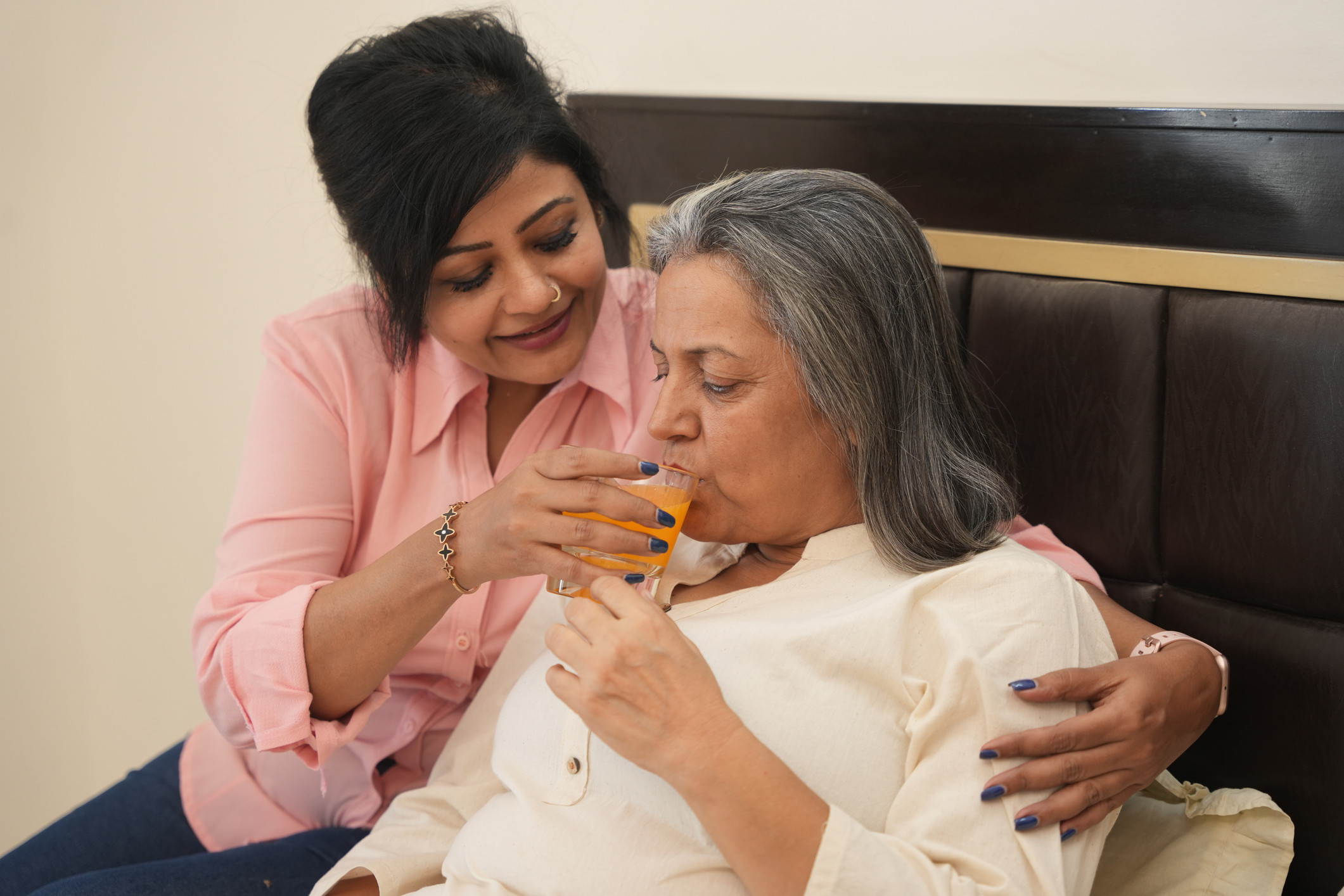
This research opportunity is for South Asian caregivers living in the GTA who cared for an older family member with memory loss during the COVID-19 pandemic.
Their goal is to gather stories that can help inform future interventions to better support care partners, like you, during future public health crises.
What will be expected of me?
You'll be invited to participate in a 60-90 minute telephone or Zoom interview to share your caregiving story. The timing is flexible to work with your schedule. There will be a token of appreciation shared for your participation.
How do I participate?
To express your interest in participating, please contact sac@mcmaster.ca or Pamela Baxter, baxterp@mcmaster.ca
-
You cannot leave comment in this blogpost unless you are a part of the project panel.
A Qualitative Study of Caregivers Managing Their Own Health While Caring for an Older Adult with Chronic Illness

About the opportunity
Researchers at the University of Toronto are currently recruiting participants for their study: The Intersection of Caregiving and Illness: A Qualitative Study of Caregivers Managing Their Own Health While Caring for an Older Adult with Chronic Illness.
Their goal is to explore the experiences of caregivers who are managing both their caregiving responsibilities and their own health needs, in order to better understand the challenges they face and to identify ways to improve support for them.
They are looking for:
- Those currently providing care to an older adult (age 60+) with a chronic illness (e.g., heart disease, diabetes, cancer), who are also managing their own health conditions (e.g., chronic illness, mental health concerns). We are defining “sickness” broadly to capture a range of experiences.
- Participants 18 years or older
What will be expected of me?
A virtual or in person semi-structured interview that will take approximately 45-60 minutes, where caregivers can share their experiences and challenges related to managing their own health while caring for an older adult.
How do I participate?
Please contact kayla.sabloff@mail.utoronto.ca and emma.archer@mail.utoronto.ca to express your interest.
-
You cannot leave comment in this blogpost unless you are a part of the project panel.
Research Study: Exploring Perceptions and Experiences of ChatGPT in Caregiving
About the opportunity
Dr. Kristina Kokorelias and Dr. Maurita Harris, principal investigators at the University of Toronto/ Laurier, will be leading a research study to understand how family caregivers of older adults with chronic illnesses perceive and experience using ChatGPT (or similar AI tools) as part of their caregiving roles.
They are looking for family caregivers of older adults (ages 65 and above) who have used ChatGPT or similar AI tools in their caregiving tasks (e.g., information-seeking, emotional support, care coordination).
What will be expected of me?
- Completing a short demographic survey to gather background information.
- Taking part in a virtual semi-structured interview (approximately 30-45 minutes), conducted via a platform like Zoom or Skype.
How do I participate?
If you are interested in collaborating or would like more information, please contact isabelle.mangindaan@mail.utoronto.ca or Dr. Kokorelias directly at k.kokorelias@utoronto.ca and/ or Dr. Harris at mauharris@wlu.ca.
-
You cannot leave comment in this blogpost unless you are a part of the project panel.
Join the Advisory Committee for the Liver Cancer Referral Pathway Project (LCRPP)

About the opportunity
Liver Canada is recruiting two caregivers to join the Advisory Committee for the Liver Cancer Referral Pathway Project (LCRPP).
They are looking for people who have lived experience as a patient or caregiver navigating liver cancer care and with knowledge of patient needs, challenges, and priorities during treatment and recovery.
What will be expected of me?
You'll be expected to connect with the committee three times per year for approximately 60-90 minutes. As a member of the Advisory Committee, you'll be expected to provide input from the patient perspective to make sure the pathway is patient-centered, offer feedback on care coordination, communication, and overall patient experience. You'll also have the opportunity to advocate for patients and caregivers, ensuring their voices are heard in care decisions and program improvements.
How do I participate?
If you're interested in participating, or would like more information about the project before making a decision, please contact Anh Thu, Health Promotions Programs Lead at Liver Canada, at 416-491-3353 x 4931 or by email at atnguyen@liver.ca.
-
You cannot leave comment in this blogpost unless you are a part of the project panel.
Share your insights: Exploring Service Availability and Support for Alzheimer’s Caregivers

About the research
"Exploring Service Availability and Support for Alzheimer’s Caregivers: An Asset Mapping and Co-Design Approach", aims to explore the experiences and perspectives of service providers and caregivers regarding dementia care practices. The project is approved by the Research Ethics Board at the University of Toronto, and participation is entirely voluntary.What will be expected of me?
Participants will have the chance to reflect on their experiences, identify gaps in current services, and help shape resources that better support caregivers of people living with Alzheimer’s disease and other related dementias. Participants may also learn about services they didn’t know existed and their input will directly inform more responsive and timely support for caregivers and people living with Alzheimer’s.
Participants will provide their input in an online interview, held on Zoom, typically lasting about 1 hour. The date of the session will be booked to accommodate your availability.
You must be based in Ontario to participate.
How do I register?
If you're interested in sharing your insights with the researchers, simply send an email to ekemeziw@mcmaster.ca expressing your interest.
-
You cannot leave comment in this blogpost unless you are a part of the project panel.
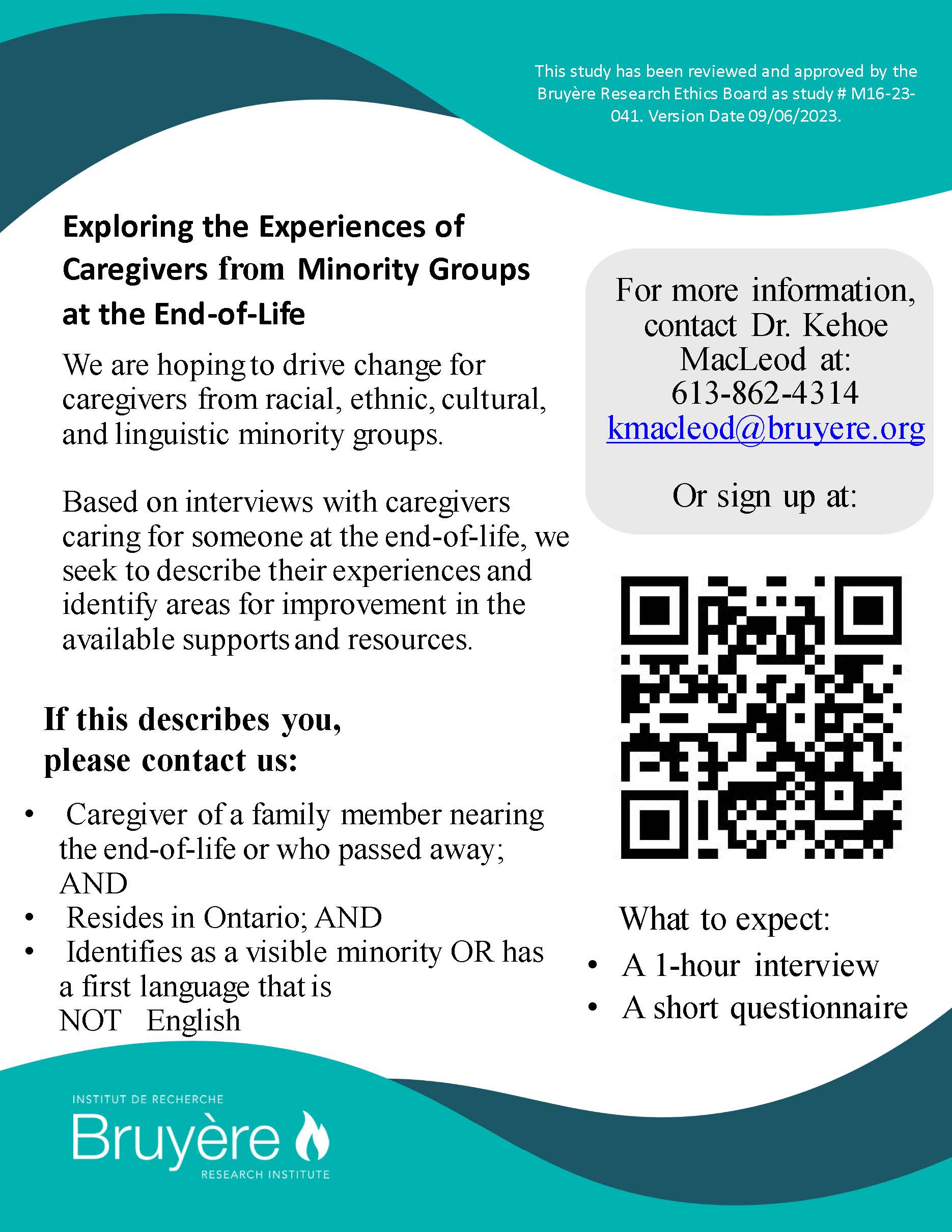
Exploring the Experiences of Caregivers from Minority Groups at the End-of-Life